Engine Test Stand Plans: A Comprehensive Guide
Comprehensive plans‚ often available as PDFs‚ detail assembly from steel components‚ offering diagrams for building a self-contained engine testing rig for break-in and tuning.
Engine test stands represent a crucial component in engine development‚ modification‚ and even basic maintenance. They provide a controlled environment for running an engine outside of a vehicle chassis‚ facilitating detailed analysis and diagnostics. The core concept revolves around a robust structure capable of securely mounting an engine‚ coupled with the necessary systems to operate it – fuel‚ cooling‚ and oil.
PDF plans are frequently utilized by enthusiasts and professionals alike‚ offering detailed instructions for constructing these stands. These plans typically outline material lists‚ cutting diagrams‚ and assembly procedures. The availability of such resources democratizes engine testing‚ allowing individuals with fabrication skills to build custom solutions tailored to their specific engine size and testing requirements. They are essential for initial run-in‚ tuning‚ and identifying potential issues before installation.
Why Build an Engine Test Stand?
Constructing an engine test stand offers significant advantages over initial engine starts within a vehicle. Primarily‚ it allows for thorough pre-installation testing‚ identifying leaks‚ and verifying proper operation without risking damage to other vehicle components. PDF plans enable a cost-effective‚ customized solution‚ avoiding expensive pre-built options.
Furthermore‚ a dedicated stand simplifies the break-in process‚ ensuring optimal ring seating and component lubrication. It also facilitates precise tuning and diagnostics‚ allowing for accurate data collection and analysis. Utilizing readily available materials‚ as often detailed in PDF guides‚ makes building accessible. Ultimately‚ a test stand promotes engine longevity and performance by addressing issues before they escalate into major problems.
Safety Considerations for Engine Testing
Engine testing inherently involves risks‚ demanding strict adherence to safety protocols. PDF plans should emphasize robust flywheel shielding and safety enclosures to contain potential component failures. Proper ventilation is crucial to dissipate exhaust fumes‚ preventing carbon monoxide poisoning. Secure engine mounting‚ as detailed in construction PDFs‚ is paramount to prevent movement during operation.
Fire suppression systems are highly recommended‚ given the presence of flammable fluids. Always wear appropriate personal protective equipment‚ including eye protection and hearing protection. Electrical systems must be properly grounded to avoid shocks. Thoroughly review all PDF instructions and understand potential hazards before commencing testing. Remote operation‚ if incorporated into the plans‚ enhances operator safety.

Planning Your Engine Test Stand
PDF plans guide selecting appropriate steel‚ determining engine size‚ and gathering essential tools for a successful build‚ ensuring a structurally sound test stand.
Determining Engine Size and Capacity
PDF engine test stand plans frequently emphasize the critical first step: accurately assessing your engine’s dimensions and weight. This dictates the required strength and scale of the stand’s construction; Larger‚ heavier engines necessitate robust steel framing – typically RHS profiles – to prevent instability during operation.
Carefully review the engine specifications‚ including overall length‚ width‚ height‚ and mounting point locations. These measurements directly influence the engine mounting plate design detailed within the PDF. Consider future engine swaps; a slightly oversized stand offers versatility.
The PDF should also guide you in calculating the load capacity needed‚ factoring in not just the engine’s weight‚ but also the potential forces generated during testing. Proper planning prevents structural failure and ensures a safe testing environment.
Choosing Materials: Steel Types and Thickness
Engine test stand plans in PDF format consistently recommend Rectangular Hollow Section (RHS) steel for the frame due to its excellent strength-to-weight ratio. Common choices include 30mm and 25mm RHS‚ though the specific dimensions depend on engine size. The PDF will detail appropriate thicknesses – generally‚ 3mm to 5mm steel is sufficient for smaller engines‚ increasing with capacity.
Mild steel is typically used for the main structure‚ offering a balance of weldability and cost. The engine mounting plate often benefits from thicker steel (6mm+) to withstand significant stress.
PDF guides emphasize verifying steel quality and ensuring welds are performed by a qualified welder to maintain structural integrity. Scraps can be utilized‚ but proper assessment is crucial for safety and reliability.
Essential Tools for Construction
Engine test stand plans (PDF) invariably list a robust welding machine as paramount‚ alongside appropriate Personal Protective Equipment (PPE) – a welding helmet‚ gloves‚ and fire-resistant clothing are non-negotiable. Angle grinders‚ equipped with cutting and grinding discs‚ are essential for preparing and shaping the RHS steel profiles.
Accurate measuring tools – tape measures‚ squares‚ and levels – are critical for ensuring a square and stable frame. A drill press or robust drill with metal drill bits is needed for mounting components.
PDF guides often suggest a metal chop saw for precise cuts. Clamps are vital for holding pieces during welding. Finally‚ basic hand tools like wrenches and sockets will be required for assembly.
Core Components of an Engine Test Stand
PDF plans detail an engine mounting plate‚ a robust RHS steel frame‚ and crucial flywheel shielding for operator safety during engine testing procedures.
Engine Mounting Plate Design
PDF engine test stand plans emphasize a robust engine mounting plate as a foundational element. These plans typically illustrate a steel plate‚ often constructed from thick gauge material‚ designed to securely bolt to the engine block.
Detailed diagrams within the PDFs showcase various mounting hole patterns to accommodate different engine families – small block‚ big block‚ inline‚ and so on.
Critical considerations highlighted in the plans include ensuring sufficient rigidity to withstand engine vibrations and torque reactions.
Reinforcement welding is frequently specified around mounting points.
Some advanced PDF guides suggest incorporating adjustable mounting slots to fine-tune engine alignment for optimal driveline performance during testing. Accurate drilling and precise fabrication are paramount for a secure and reliable connection.
Frame Construction: RHS Steel Profiles
PDF engine test stand plans consistently recommend Rectangular Hollow Section (RHS) steel profiles for frame construction due to their excellent strength-to-weight ratio and ease of welding. Plans detail specific RHS dimensions – commonly 30mm‚ 25mm‚ or larger – based on the anticipated engine size and power output.
Diagrams within these PDFs illustrate welded frame designs‚ often incorporating cross-bracing for enhanced rigidity and to minimize flex during engine operation.
The plans emphasize the importance of accurate cutting and precise welding techniques to maintain structural integrity.
Detailed cut lists are usually included‚ specifying the length and quantity of each RHS section required.
Some advanced PDF guides suggest gusset plates at key weld joints for added reinforcement‚ ensuring a stable and durable testing platform.
Flywheel Shielding and Safety Enclosures
PDF engine test stand plans universally prioritize operator safety‚ with detailed sections dedicated to flywheel shielding and‚ often‚ full safety enclosures. These plans emphasize the critical need to contain potential debris ejected during engine testing‚ particularly from a failing flywheel.
Shielding designs‚ illustrated in the PDFs‚ typically utilize heavy-gauge steel plates securely mounted around the flywheel’s perimeter.
More comprehensive plans incorporate a complete enclosure‚ constructed from steel framework and sheeting‚ to contain noise‚ exhaust fumes‚ and flying parts.
These PDF guides often specify minimum shielding thicknesses and mounting requirements to withstand potential impacts.
Access doors and viewing windows are included in enclosure designs‚ always with safety considerations like shatter-resistant materials.
Fluid Systems Integration
PDF plans detail integrating fuel‚ cooling‚ and oil systems – tank‚ pump‚ radiator‚ hoses‚ and filters – for complete engine operation and testing.
Fuel System Setup: Tank‚ Pump‚ and Lines
Engine test stand plans (PDF) typically dedicate a section to the fuel system‚ emphasizing safety and reliable fuel delivery. These plans illustrate the proper placement of a fuel tank‚ sized appropriately for the engine’s consumption during testing.
Detailed diagrams showcase the fuel pump selection – mechanical or electric – and its mounting location relative to the tank. Crucially‚ the PDF guides specify fuel line routing‚ utilizing fire-resistant hoses and appropriate fittings to prevent leaks.
They also cover fuel pressure regulation‚ often incorporating a fuel pressure gauge for monitoring. Plans frequently advise on incorporating a fuel shut-off valve for emergency situations‚ a vital safety feature. Proper grounding of the fuel tank is also highlighted to avoid static electricity buildup and potential ignition sources.
Cooling System Integration: Radiator and Hoses
Engine test stand plans (PDF) dedicate significant attention to cooling‚ recognizing its critical role in preventing engine damage during prolonged testing. These plans detail radiator selection based on engine heat output‚ specifying core size and fin density.
Diagrams illustrate proper radiator mounting‚ ensuring adequate airflow‚ often incorporating a fan for forced cooling. The PDF guides meticulously outline hose routing‚ recommending high-temperature silicone hoses to withstand heat and pressure.
They emphasize the importance of correctly sized hoses to avoid restrictions and cavitation. Plans frequently include instructions for integrating a coolant reservoir and overflow tank‚ maintaining consistent coolant levels. Thermostat placement and operation are also covered‚ ensuring optimal engine temperature regulation throughout testing.
Oil System Integration: Pump‚ Filter‚ and Reservoir
Engine test stand plans (PDF) prioritize a robust oiling system‚ crucial for engine longevity during testing. Detailed schematics illustrate the placement of an external oil pump‚ sized appropriately for the engine’s oil flow requirements. These plans specify the use of a high-capacity oil filter‚ ensuring contaminant removal.

The PDF guides emphasize the necessity of an oil reservoir‚ providing sufficient oil volume and aiding in de-aeration. Diagrams show reservoir mounting and baffling to prevent oil starvation during dynamic testing.
Hose and fitting selection are covered‚ recommending oil-resistant materials. Plans often include provisions for oil temperature monitoring‚ allowing for early detection of overheating. Proper oil cooler integration is also frequently detailed‚ maintaining optimal oil viscosity.

Data Acquisition and Monitoring
PDF plans often detail sensor integration for RPM‚ temperature‚ and pressure‚ alongside data logging systems and software for comprehensive engine performance analysis.
Sensors for RPM‚ Temperature‚ and Pressure
Engine test stand plans (PDF) frequently emphasize the crucial role of accurate data acquisition‚ starting with selecting appropriate sensors. For measuring engine speed‚ RPM sensors – inductive‚ optical‚ or Hall effect – are commonly specified‚ providing pulse signals proportional to rotational velocity. Temperature monitoring necessitates thermocouples or RTDs‚ strategically placed in coolant passages‚ oil lines‚ and exhaust manifolds to detect overheating.
Pressure sensors‚ vital for assessing combustion efficiency and system health‚ are detailed in plans for monitoring oil pressure‚ fuel pressure‚ and manifold vacuum. PDF guides often include wiring diagrams and calibration procedures for each sensor type. Selecting sensors with appropriate ranges‚ accuracy‚ and durability is paramount for reliable data collection during engine testing‚ ensuring comprehensive performance evaluation and identifying potential issues.
Data Logging Systems and Software
Engine test stand plans (PDF) often highlight the necessity of robust data logging capabilities. These systems capture sensor readings – RPM‚ temperature‚ pressure – over time‚ enabling detailed performance analysis. Common options include dedicated data acquisition (DAQ) systems with analog-to-digital converters‚ paired with specialized software. Software packages allow for real-time monitoring‚ graphical display of data‚ and post-test analysis.
PDF guides frequently recommend software capable of customizable dashboards‚ data export to spreadsheet formats‚ and automated report generation. Some plans suggest utilizing open-source platforms like LabVIEW or Python for advanced data processing. Proper configuration of sampling rates and data storage capacity is crucial for capturing transient events and ensuring comprehensive test results‚ ultimately aiding in engine optimization.
Display and Monitoring Instruments
Engine test stand plans (PDF) invariably emphasize the importance of clear‚ real-time monitoring during operation. Essential instruments include tachometers for RPM‚ temperature gauges for coolant and oil‚ and pressure gauges for fuel and oil systems. Digital displays offer greater precision and the ability to log data directly. Many plans suggest incorporating wideband oxygen sensors for air-fuel ratio monitoring.
PDF resources often detail mounting locations for these instruments‚ ensuring easy visibility for the operator. Some advanced plans recommend integrating a central control panel with a multi-meter display‚ consolidating key parameters. Selecting instruments with appropriate ranges and accuracy is vital for reliable data acquisition and safe engine operation‚ contributing to effective testing and tuning.

Construction Details & PDF Resources
PDF plans provide detailed assembly diagrams‚ guiding construction with specific steel component layouts and welding instructions for a structurally sound engine test stand.
Detailed Assembly Diagrams
Engine test stand plans‚ frequently distributed as PDF documents‚ prioritize clear and comprehensive assembly diagrams. These diagrams are crucial for visualizing the construction process‚ breaking down the build into manageable stages. They typically illustrate the precise arrangement of steel components – RHS profiles‚ mounting plates‚ and shielding – ensuring accurate alignment and structural integrity.
Good PDF plans will feature exploded views‚ showcasing how each part connects to the others. Detailed dimensions are essential‚ allowing for precise cutting and welding. Furthermore‚ these diagrams often highlight critical welding points and recommended joint types. The best resources will include multiple views‚ offering perspectives from various angles to eliminate ambiguity during the build. Access to these visual guides significantly simplifies the construction process‚ even for those with limited fabrication experience.
Welding Techniques for Structural Integrity
Engine test stand plans‚ often found in PDF format‚ emphasize robust welding as fundamental to safety and performance. Structural integrity demands careful consideration of welding techniques. MIG and TIG welding are commonly recommended for joining the RHS steel profiles‚ ensuring strong‚ clean welds.
PDF guides should detail appropriate weld bead patterns – fillet welds for joining plates‚ and potentially plug welds for added reinforcement. Proper penetration is vital; plans may specify weld size based on steel thickness. Pre-fitting components accurately minimizes stress during welding. Post-weld inspection is crucial‚ checking for porosity or cracks. Following the PDF’s welding recommendations guarantees a stable and secure test stand capable of withstanding engine vibrations and forces.
Sourcing Engine Test Stand Plans (PDF)
Engine test stand plans in PDF format are readily available online through various channels. Online forums dedicated to automotive fabrication and engine building frequently host user-submitted plans and resources; Websites specializing in DIY projects and metalworking often offer downloadable PDF guides‚ sometimes for a fee‚ providing detailed instructions and material lists.
Searching for “engine test stand plans PDF” yields numerous results. Be sure to evaluate the source’s credibility and the plan’s completeness before committing to construction. Some PDFs offer basic designs‚ while others include advanced features like dynamometer integration. Carefully review the plans to ensure they align with your skill level and available resources.

Advanced Features & Modifications
PDF plans can be adapted for dynamometer integration‚ load cell implementation‚ and remote control systems‚ enhancing testing capabilities and operator safety.
Dynamometer Integration for Power Measurement
PDF engine test stand plans frequently outline provisions for dynamometer integration‚ a crucial upgrade for accurate power measurement. These plans detail mounting locations and structural reinforcements necessary to accommodate the dynamometer’s physical demands and transfer loads effectively.
Integration typically involves a robust coupling between the engine’s flywheel and the dynamometer’s absorption unit. Detailed diagrams within the PDFs illustrate alignment procedures to minimize vibration and ensure precise readings. Considerations include selecting a dynamometer type – chassis‚ engine‚ or eddy current – based on testing goals and budget.
Furthermore‚ plans may specify modifications to the data acquisition system to interface with the dynamometer’s sensors‚ enabling real-time monitoring of horsepower‚ torque‚ and RPM. Successful integration transforms a basic test stand into a sophisticated performance evaluation tool.
Load Cell Implementation for Torque Analysis
PDF engine test stand plans often include sections detailing load cell implementation for precise torque analysis. These plans illustrate how to strategically mount load cells – typically between the engine and the stand’s frame – to accurately measure rotational forces. Proper mounting is critical‚ requiring rigid connections and careful alignment to avoid extraneous stresses.
The PDF documentation will specify load cell capacity‚ ensuring it matches the expected torque output of the engine under test. Signal conditioning and amplification circuits are also addressed‚ along with integration into the data acquisition system.
Calibration procedures are vital for accurate readings‚ and plans may provide guidance on this process. Implementing load cells allows for detailed torque curves and performance characteristics to be determined‚ enhancing engine development and tuning efforts.
Remote Control Systems for Safe Operation
PDF engine test stand plans increasingly emphasize remote control systems for enhanced operator safety. These systems allow starting‚ stopping‚ and throttle control from a safe distance‚ minimizing exposure to rotating parts and potential hazards. Detailed wiring diagrams within the PDF illustrate the integration of remote controls with the engine’s ignition and fuel systems.
Emergency shut-off functionality is a key component‚ often implemented with large‚ easily accessible buttons. Plans detail the necessary relays and safety interlocks to ensure immediate engine shutdown in critical situations.
Wireless remote options are also covered‚ outlining considerations for signal range and interference. Implementing a robust remote control system is paramount for responsible engine testing‚ protecting personnel and preventing accidents.

Troubleshooting Common Issues
PDF guides often address vibration‚ leaks‚ and electrical faults; detailing dampening techniques‚ leak prevention‚ and systematic fault-finding procedures for engine stands.
Vibration Dampening Techniques
Engine test stands‚ particularly during initial run-in and tuning‚ can experience significant vibration. PDF plans frequently suggest incorporating vibration dampening measures to ensure accurate data acquisition and prevent structural fatigue. These techniques often involve utilizing rubber mounts between the engine and the mounting plate‚ effectively isolating the engine’s vibrations from the stand’s frame.
Additionally‚ strategically placed weights on the frame can counteract resonant frequencies. Some plans detail the construction of a robust‚ heavy-duty frame using RHS steel profiles‚ inherently reducing vibration amplitude. Utilizing a solid foundation‚ like a concrete pad‚ is also crucial. Detailed PDF resources may include specific material recommendations for dampening pads and calculations for optimal weight placement‚ contributing to a stable and reliable testing environment.
Leak Detection and Prevention
Engine test stand plans‚ often found as PDF downloads‚ emphasize the critical importance of leak detection and prevention during operation. Fuel‚ oil‚ and coolant leaks pose safety hazards and can compromise test results. Detailed plans frequently recommend using high-quality fittings and hoses‚ along with appropriate sealing compounds‚ to minimize leak points.
Visual inspection is paramount‚ and many PDF guides suggest incorporating clear viewing panels or access ports for easy leak identification. Pressure testing the fluid systems before engine start-up is also a common recommendation. Implementing drip trays beneath potential leak sources further aids in containment and detection. Thoroughly reviewing the PDF’s assembly instructions and utilizing proper torque specifications during construction are vital preventative measures.

Electrical System Fault Finding
Engine test stand plans‚ frequently available as detailed PDF documents‚ often include a section dedicated to electrical system troubleshooting. Common issues involve wiring connections‚ sensor malfunctions‚ and power supply problems. The PDF guides typically advise starting with a visual inspection of all wiring‚ checking for loose connections or damaged insulation.
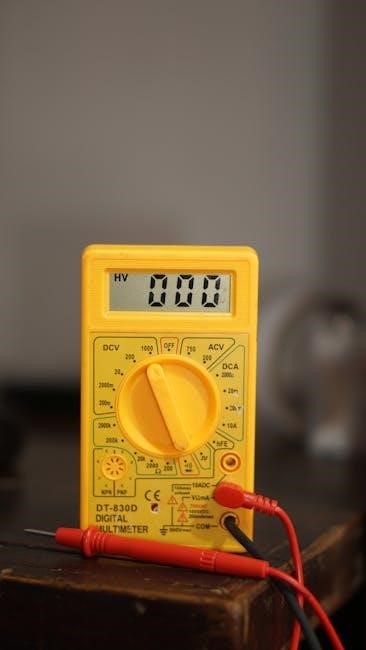
A multimeter is essential for testing voltage and continuity. PDF schematics illustrate wiring diagrams‚ aiding in tracing circuits and identifying potential faults. Many plans recommend fusing critical circuits to prevent damage from short circuits. Understanding the function of each sensor and its corresponding signal is crucial for accurate diagnosis. Referencing the PDF’s component list and wiring diagrams will streamline the fault-finding process.