Cuisinart Pressure Cooker Manual: A Comprehensive Guide
This guide offers detailed instructions for Cuisinart electric pressure cookers, including the CPC-600 and EPC-1200 series, ensuring safe and efficient operation․
Cuisinart electric pressure cookers represent a modern approach to convenient and efficient cooking․ These versatile appliances combine the functionality of a pressure cooker, slow cooker, and rice cooker, all in one unit․ Models like the CPC-600 and EPC-1200 series are designed for ease of use, offering pre-programmed settings and customizable options․
Understanding the core principles of pressure cooking, alongside the specific features of your Cuisinart model, is key to unlocking its full potential․ This guide will navigate you through the various functions, safety precautions, and cooking techniques, empowering you to create delicious meals with confidence․
Understanding Your Cuisinart Model (CPC-600 & EPC-1200 Series)
The CPC-600 series, including the CPC-610XA, is known for its user-friendly control panel and straightforward operation․ Conversely, the EPC-1200PC offers a broader range of features and a more advanced interface․ Both series share core functionalities like pressure cooking, slow cooking, and sautéing․
Key differences lie in the pre-programmed settings and customization options․ Referencing your specific model’s instruction booklet is crucial for understanding its unique capabilities․ Familiarizing yourself with the components, such as the removable pot and steam release valve, will enhance your cooking experience․
Safety First: Important Precautions
Always read the manual before initial use to understand proper operation and safety features․ Prioritize safe pressure release methods and heed all warnings provided․
Reading the Manual Before First Use
Before operating your Cuisinart electric pressure cooker, thoroughly review the provided instruction manual․ Understanding the cooker’s functions, safety precautions, and proper usage is crucial for preventing accidents and ensuring optimal performance․ Familiarize yourself with all components, including the steam release valve and float valve, and their roles in the pressure cooking process․
Pay close attention to warnings regarding pressure release methods – natural versus quick release – and the potential hazards associated with each․ Ignoring these guidelines could lead to burns or damage to the appliance․ The manual details specific instructions for various cooking modes and recipes, maximizing your cooking experience․ Proper initial reading guarantees safe and delicious results!
Pressure Release Methods: Natural vs․ Quick Release
Cuisinart pressure cookers offer two primary pressure release methods: natural and quick release․ Natural release involves allowing the pressure to dissipate gradually over time, ideal for soups and delicate foods, preventing splattering․ Quick release, achieved by manually venting steam, rapidly reduces pressure, suitable for vegetables or when time is critical․

However, quick release can cause liquids to splatter, so caution is advised․ The manual emphasizes understanding which method is appropriate for each recipe․ Incorrect release can affect food texture and potentially pose a safety risk․ Always follow the manual’s guidance for safe and effective pressure release․
Safety Features of Cuisinart Pressure Cookers
Cuisinart pressure cookers are engineered with multiple safety features․ A key component is the locking lid, preventing opening during operation․ The float valve indicates pressure levels, rising to show pressure and falling when released․ Furthermore, a steam release valve controls steam expulsion, and a safety fuse prevents over-pressurization․
The manual stresses the importance of regularly checking these features․ Proper function ensures safe cooking․ Never attempt to force the lid open, and always verify the float valve has dropped before opening․ These safeguards contribute to a secure pressure cooking experience․

Getting Started: Components and Functions
Familiarize yourself with the removable pot, inner lid, control panel, steam release, and float valve – essential parts for optimal Cuisinart pressure cooker performance․
Removable Pot and Inner Lid
The Cuisinart pressure cooker features a durable, removable pot designed for easy cleaning and versatility․ This non-stick interior simplifies food release and minimizes the need for excessive oil․ Crucially, ensure the pot is correctly seated within the cooker before operation․
The inner lid houses the sealing ring and float valve, vital for building and maintaining pressure․ Regularly inspect the sealing ring for cracks or damage, replacing it as needed to guarantee a secure seal․ Proper alignment of the inner lid is paramount for safe pressure cooking․
Always confirm both components are clean and properly installed before each use, following the detailed instructions in your model’s manual․
Control Panel Overview (CPC-610XA)
The CPC-610XA boasts an intuitive control panel featuring clearly labeled buttons for various cooking functions․ Users will find dedicated settings for Pressure Cook (High/Low), Slow Cook, Sauté/Brown, and Steam․ A digital display indicates cooking time and pressure level․
The ‘Start/Stop’ button initiates and cancels cooking cycles․ ‘Keep Warm’ automatically activates post-cooking, maintaining food temperature․ Adjust time and pressure using the corresponding buttons․ Familiarize yourself with each function before operation, consulting the instruction booklet for detailed explanations․
Proper understanding of the control panel is key to unlocking the full potential of your Cuisinart pressure cooker․
Steam Release Valve and Float Valve
The steam release valve regulates pressure during cooking and release․ Ensure it’s properly positioned – ‘Vent’ for quick release, ‘Seal’ for pressure building․ The float valve indicates internal pressure; it rises during cooking and falls when pressure is released․
Never force the valve open during operation․ Regularly inspect both valves for cleanliness and proper function․ A clogged valve can cause dangerous pressure buildup․ Understanding these components is crucial for safe operation․
Always refer to the manual for specific instructions regarding valve operation and maintenance․

Cooking Modes and Programs
Cuisinart pressure cookers feature versatile programs like Pressure Cook (High/Low), Slow Cook, and Sauté/Brown, offering flexibility for diverse recipes․
Pressure Cook (High & Low)
The Pressure Cook function is central to Cuisinart cookers, offering both High and Low pressure settings․ High pressure significantly reduces cooking times for tougher cuts of meat and dense foods like beans․ Low pressure is ideal for more delicate items, preventing overcooking and maintaining texture․
Users can adjust cooking time and pressure levels based on the recipe․ Proper liquid levels are crucial for building pressure; always adhere to minimum requirements․ The cooker automatically regulates pressure during operation, ensuring consistent results․ Experimenting with these settings unlocks a world of flavorful, quickly prepared meals․
Slow Cook Settings
Cuisinart pressure cookers also feature versatile Slow Cook settings, offering Low, Medium, and High heat levels․ These settings mimic traditional slow cooking, allowing for tender, flavorful results over extended periods․ Ideal for soups, stews, and braised dishes, slow cooking develops rich, complex flavors․
Users can program the slow cook duration, providing flexibility for meal planning․ The function operates independently of pressure, offering a convenient alternative to traditional slow cookers․ Ensure sufficient liquid is present, as evaporation occurs during prolonged cooking․ Enjoy effortless, home-cooked meals with minimal supervision․
Sauté/Brown Function
The Sauté/Brown function on your Cuisinart pressure cooker allows for searing meats and vegetables directly in the pot before pressure cooking․ This step builds flavor by creating a Maillard reaction, enhancing the overall dish․ Utilize this feature to brown onions, garlic, or meats for deeper, richer results․
The function operates at a controlled temperature, preventing burning․ Remember to deglaze the pot after sautéing, scraping up any browned bits for added flavor․ This ensures even heating and prevents the “Burn” error during pressure cooking․ It’s a convenient one-pot solution for complete meal preparation․
Using Your Cuisinart Pressure Cooker
Mastering your Cuisinart requires proper ingredient addition, precise time and pressure settings, and careful monitoring for optimal, safe, and delicious results․
Adding Ingredients and Liquids
Proper ingredient and liquid ratios are crucial for successful pressure cooking․ Always adhere to minimum and maximum fill lines indicated within the Cuisinart pot․ Insufficient liquid can cause scorching, while overfilling may lead to blockage of the steam release valve;
For most recipes, at least one cup of liquid is recommended; Consider the cooking time; longer cooks require more liquid․ Layer ingredients strategically – liquids first, then solids․ Avoid stirring after sealing the lid, as this can cause food to stick and potentially block the vent․
Remember that liquids do not evaporate as quickly under pressure, so use less than you would for conventional cooking methods․ Always double-check the recipe for specific liquid requirements․
Setting Cooking Time and Pressure Level
Cuisinart pressure cookers offer adjustable time and pressure settings․ Utilize the control panel to select the desired cooking time, typically ranging from minutes to hours․ High pressure is ideal for faster cooking of tougher foods, while low pressure suits delicate items․
The CPC-610XA model features pre-programmed settings for common dishes, simplifying the process․ Always refer to the recipe for recommended time and pressure levels․ Remember that preheating time is not included in the programmed cooking time․
Adjust cooking times based on ingredient quantity and desired tenderness․ Experimentation may be needed to perfect results for personal preferences․
Monitoring the Cooking Process
During pressure cooking, the Cuisinart cooker will display the remaining cooking time․ Avoid disturbing the cooker during operation; opening the lid prematurely can cause a sudden pressure release․ The float valve will rise to indicate pressure has been reached․
Pay attention to the steam release valve; it should remain sealed unless intentionally releasing pressure․ Observe the cooker for any unusual noises or leaks, and discontinue use if detected․ Recipes often suggest checking for doneness towards the end of the cooking cycle․
Carefully monitor the process for optimal results and safety․
Recipes and Cooking Times
Explore a variety of recipes tailored for your Cuisinart pressure cooker, including guides for rice, meats, and legumes, with precise cooking times provided․
Basic Rice Cooking Guide
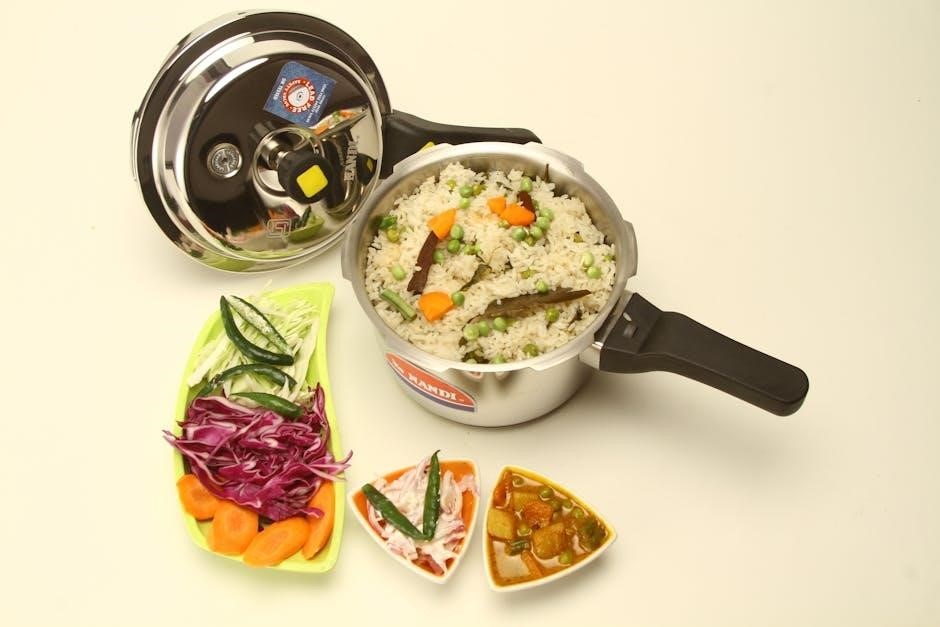
Achieving perfectly cooked rice in your Cuisinart pressure cooker is remarkably simple․ Begin by adding rice and water – a common ratio is 1 cup of rice to 1 cup of water, though adjustments may be needed based on rice type․ Secure the lid, ensuring the steam release valve is sealed․ Select the “Pressure Cook” function on high pressure and set the cooking time to 3-5 minutes for white rice, and 22-25 minutes for brown rice․
Allow for natural pressure release for 10-15 minutes, then carefully release any remaining pressure․ Fluff the rice with a fork before serving․ Experiment with different water-to-rice ratios to find your preferred consistency, remembering that longer-grain rice generally requires less water․
Meat and Poultry Recipes
Cuisinart pressure cookers excel at tenderizing tougher cuts of meat, delivering flavorful results in a fraction of the traditional cooking time․ For pot roast, sear the meat first using the “Sauté” function, then add broth and vegetables․ Pressure cook on high for 35-45 minutes, followed by natural pressure release․
Chicken breasts can be cooked from frozen in approximately 10-15 minutes on high pressure, with a quick release․ Always ensure meat reaches a safe internal temperature․ Explore recipes for pulled pork, beef stew, and flavorful chicken curries, leveraging the cooker’s ability to infuse flavors deeply․
Bean and Legume Recipes
Cuisinart pressure cookers dramatically reduce the cooking time for dried beans and legumes, eliminating the need for overnight soaking․ For chickpeas, use a 1:3 ratio of beans to water and cook on high pressure for 20-25 minutes, followed by a natural pressure release․
Black beans, lentils, and kidney beans also benefit from pressure cooking, resulting in perfectly tender textures․ Experiment with adding aromatics like garlic and onions for enhanced flavor․ Remember to adjust cooking times based on bean type and desired consistency, creating delicious soups and stews․

Cleaning and Maintenance
Regular cleaning ensures longevity․ Wash the pot, lid, and valve after each use․ Store the cooker properly, avoiding damage, and address common issues promptly․
Cleaning the Pot, Lid, and Valve
After each use, thoroughly clean the removable pot with warm, soapy water․ Avoid abrasive cleaners that could damage the non-stick coating․ The lid, including the inner lid, should also be washed carefully, ensuring all food particles are removed․ Pay close attention to the steam release valve and float valve; disassemble them (if possible, per the manual) and clean to prevent blockages․ Inspect the sealing ring for cracks or damage and replace if necessary․ Proper cleaning maintains hygiene and optimal performance, extending the life of your Cuisinart pressure cooker․ Always ensure all parts are completely dry before reassembling․
Storage Instructions
When storing your Cuisinart pressure cooker, ensure all components are completely dry to prevent mildew or odors․ Store the pot, lid, and accessories in a cool, dry place․ Avoid stacking heavy items on top of the lid, which could damage the sealing ring or steam release valve․ If storing for an extended period, remove the sealing ring and store it separately in a plastic bag․ Keep the manual readily accessible for future reference․ Proper storage preserves the cooker’s functionality and extends its lifespan, guaranteeing years of reliable use․
Troubleshooting Common Issues
If the cooker doesn’t pressurize, check the lid is securely locked and the steam release valve is in the sealing position․ For the “burn” message, ensure sufficient liquid is added․ If food is undercooked, increase cooking time․ A leaking lid indicates a damaged or improperly seated sealing ring – replace it․ Persistent issues may require contacting Cuisinart customer support․ Always refer to the manual for specific error codes and solutions․ Regularly inspecting components prevents many problems, ensuring optimal performance․

Downloading the Manual
Access Cuisinart’s official website or the Internet Archive for CPC-600 and EPC-1200PC manuals in PDF format, facilitating easy access․
Accessing the CPC-600 Manual Online
Finding the Cuisinart CPC-600 series user guide is readily achievable through several online resources․ The Internet Archive provides a downloadable PDF version, offering free access to this valuable resource․ ManualsLib also hosts the CPC-600 electric pressure cooker instruction booklet and recipe book, available for online viewing or download․
These platforms allow users to quickly locate and access the manual, ensuring they have the necessary information for safe and effective operation of their appliance․ Direct links and search functionalities simplify the process, making it convenient for all users to obtain the documentation they need․
Finding the EPC-1200PC Manual
Locating the Cuisinart EPC-1200PC Electronic Pressure Cooker instruction booklet is straightforward online․ ManualsLib offers a readily available PDF download, providing comprehensive instructions and recipes for this model; This resource allows users to view or download the manual directly, ensuring easy access to essential operating information․
Additionally, the document, available as a PDF file, details the proper use of the electric pressure cooker, promoting safe and efficient cooking․ These online resources simplify access to the manual, empowering users with the knowledge to maximize their cooking experience․
Cuisinart Manual Library Resources
Cuisinart provides extensive manual resources for its products, including pressure cookers․ The Internet Archive hosts downloadable PDF files for models like the CPC-600 series, offering free access to user guides․ Furthermore, ManualsLib serves as a central repository for Cuisinart manuals, including the EPC-1200PC, offering both viewing and download options․
These resources ensure users can easily find instructions, recipes, and troubleshooting tips․ Exploring the Cuisinart manual library empowers owners to fully utilize their appliances and maintain optimal performance․